
In the construction industry, time is a currency more valuable than gold. Every hour spent waiting for a portable concrete plant to be installed is an hour of lost productivity, idle labor, and escalating overhead costs. For contractors who have invested in the agility of a mobile batching plant, the speed at which it transitions from a static trailer to a fully operational production center is not merely a logistical detail; it is a financial fulcrum. A swift and seamless installation does more than just get the concrete flowing; it fundamentally recalibrates the project's financial trajectory. This article will illuminate the direct, causal link between installation velocity and project profitability, revealing why optimizing this phase is the key to unlocking superior returns.
The Fiscal Anatomy of Installation Delays
To understand the value of speed, one must first appreciate the cost of its absence. A slow installation is not a benign inconvenience; it is a financial hemorrhage that begins the moment the plant arrives on-site and continues until the first batch of concrete is discharged. It is a cost that is often invisible but always insidious.
The Idle Fleet and Standby Costs
Consider the entourage of machinery that accompanies a plant's arrival. Cranes, excavators, and manlifts are often on-site, poised to assist with the installation. When the process is protracted, these expensive assets remain on the clock, consuming fuel and accruing rental fees without contributing a single cubic meter of concrete to the project. This is a debilitating drain on the project's budget. Furthermore, the highly skilled crew tasked with the assembly—electricians, fitters, and riggers—are also standing by. Their wages are a fixed cost; the longer the installation takes, the less value the contractor derives from their expertise, effectively paying a premium for a slow start.
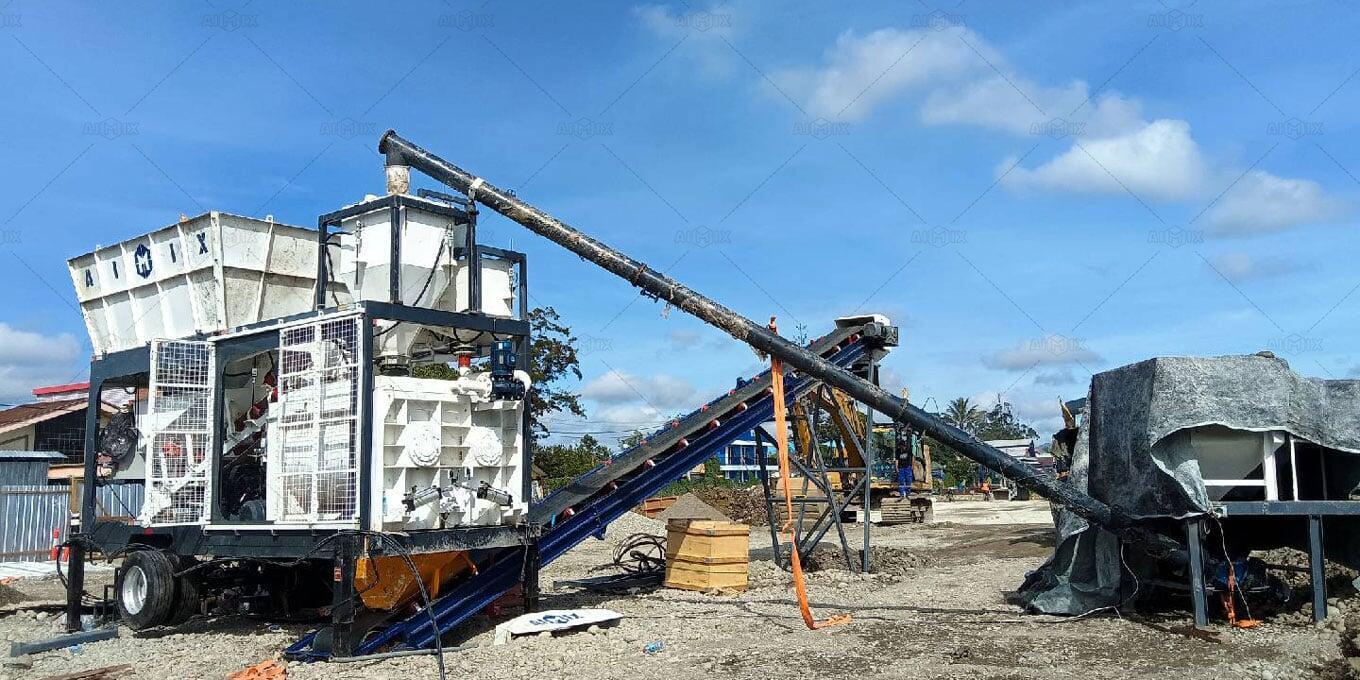
Missed Milestones and Consequential Damages
Every construction project operates on a tightly woven schedule. A delay at the very beginning has a compounding effect, acting like a falling domino that knocks down subsequent milestones. Foundation pours are pushed back, which delays steel erection, which, in turn, delays the entire superstructure. This cascading effect often triggers penalty clauses in contracts, where the contractor is forced to pay liquidated damages for each day the project runs over schedule. The cost of these penalties can rapidly eclipse any savings realized by opting for a slower, cheaper installation solution. The installation, therefore, is not just a start-up phase; it is a critical risk management event.
Architecting a Fast-Installation Mindset
The solution lies in a proactive approach to engineering and logistics. Fast installation is not a happy accident; it is a meticulously planned outcome. By considering the entire process from delivery to first pour, contractors can shave days—and sometimes weeks—off the mobilization timeline.
Modular Pre-Assembly and Foundation-Free Setup
One of the most potent strategies for accelerating installation is to opt for a plant that features modular pre-assembly. This means that major components, such as the aggregate batchers, the cement weighing system, and the control cabin, are pre-wired and pre-plumbed at the factory. These large "modules" are simply lifted into place and bolted together on-site. This approach minimizes the painstaking task of on-site fabrication. Furthermore, many modern portable plants are designed to be foundation-free. They operate on a simple, level hardstand, eliminating the days of construction required to pour concrete footings for a traditional stationary batching plant. This reduction in civil work is a massive time-saver, allowing the installation to begin the moment the truck arrives.
Rapid Connection Systems and Pre-commissioning
The speed of the final hook-up is also paramount. A plant that utilizes quick-disconnect couplings for water, air, and hydraulic lines, and multi-pin connectors for the electrical system, can be made operational in a fraction of the time of a conventionally wired plant. Additionally, a critical aspect of speed is pre-commissioning. This involves the manufacturer performing a full start-up simulation at the factory, proving that the control software and hardware are perfectly synchronized. This eliminates the "first-power-on" jitters and ensures that the plant is ready to produce commercial-grade concrete almost immediately after the physical installation is complete.
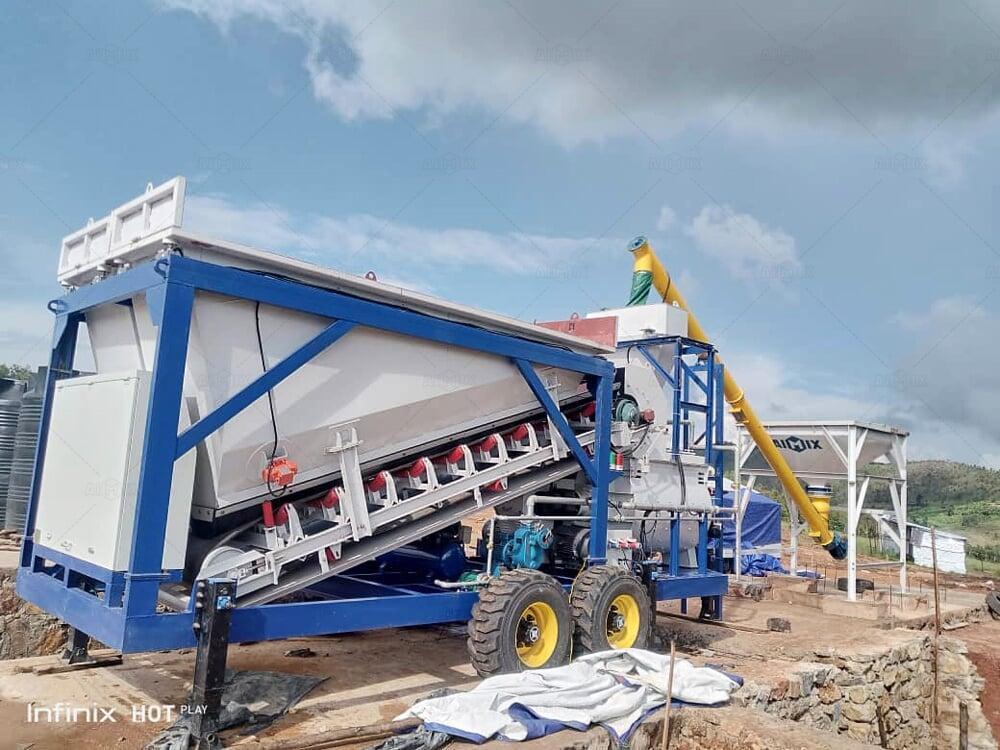
Harnessing Velocity for Competitive Advantage
Ultimately, the ability to install a plant rapidly is a competitive weapon of immense power. It allows a contractor to be more responsive, more efficient, and more profitable than their competitors.
Accelerating the Payback Period
An early start is the key to unlocking the economic potential of the plant. A portable concrete plant is a capital asset; its value is realized through production. A contractor who can have their plant operational in two days instead of two weeks immediately gains a head start on production. This accelerates the point at which the concrete produced pays back the cost of the machine. Every day of production gained is a day of revenue earned, effectively shortening the payback period and enhancing the overall return on investment. It is the difference between the plant being a drain on resources or a generator of wealth.
Enhancing Agility and Client Confidence
In a competitive bidding environment, a contractor who can guarantee a rapid mobilization is often the one who secures the contract. The ability to promise a fast start-up and a quick project completion is a powerful differentiator. It signals to the client that the contractor is professional, efficient, and in command of their craft. This confidence, once established, breeds repeat business and enhances the contractor's reputation. By mastering the art of the fast installation, a contractor doesn't just save money; they build a brand synonymous with reliability and speed, ensuring their success in the dynamic landscape of modern construction.