
Southeast Asia's construction sector is riding a wave of momentum unlike anything seen in the region's recent history. Vietnam's manufacturing-driven urbanisation, Indonesia's sprawling Nusantara capital relocation project, the Philippines' Build Better More infrastructure agenda, and Thailand's continued industrial corridor expansion are collectively generating unprecedented demand for agile, deployable concrete production solutions. Portable concrete batch plants for sale — compact, rapidly relocatable units engineered for fast mobilisation across dispersed project sites — are emerging as the equipment category best positioned to capture this regional growth surge. Mapping the opportunities and structural trends shaping this market provides essential intelligence for manufacturers, distributors, and contractors positioning themselves for the decade ahead.
Demand Catalysts Fueling Regional Market Expansion
Infrastructure Megaprojects Driving Volumetric Concrete Demand
The sheer scale of infrastructure investment currently underway across Southeast Asia is reshaping equipment procurement patterns at a structural level. Indonesia's Nusantara capital project alone is projected to require concrete volumes exceeding what conventional fixed-plant infrastructure in Kalimantan's underdeveloped interior can readily supply, creating compelling demand for portable plants capable of rapid deployment directly within the new capital's construction footprint. Vietnam's expanding expressway network, connecting Hanoi, Da Nang, and Ho Chi Minh City through ambitious highway corridors, similarly generates linear construction demand patterns ideally suited to portable plant mobility — units can leapfrog along corridor segments as construction progresses, maintaining proximity to active work fronts without the capital inefficiency of fixed installations serving only transient project phases. This megaproject-driven demand trajectory shows no signs of deceleration through the remainder of the decade.
Archipelagic Geography and Logistical Necessity
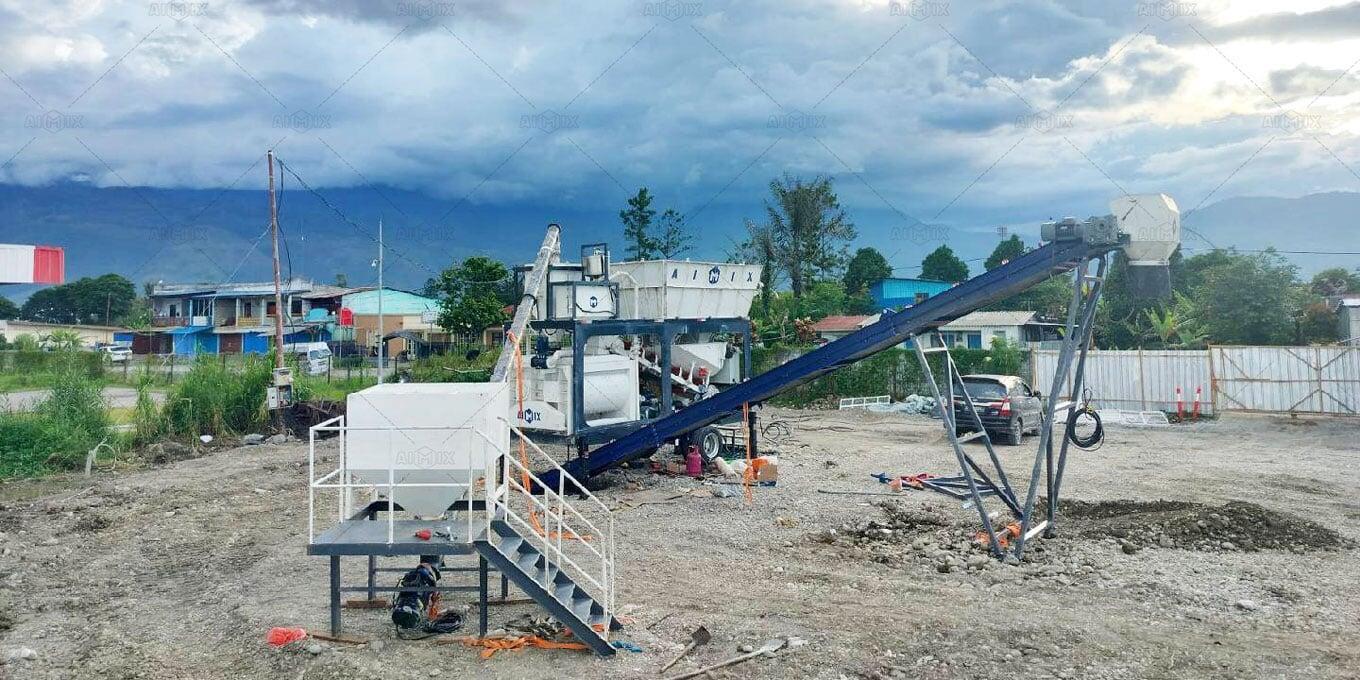
Southeast Asia's distinctive archipelagic and topographically fragmented geography across Indonesia, the Philippines, and parts of Malaysia creates logistical realities that favour portable batching solutions over centralised ready-mix infrastructure. Inter-island transport of ready-mix concrete is, in most circumstances, simply unworkable given concrete's finite workability window. Portable batching plant Malaysia, shipped in containerised or modular configurations directly to island-based project sites, circumvent this constraint entirely, enabling construction activity across geographically dispersed locations that centralised supply models cannot economically serve. This structural geographic advantage positions portable batch plants as not merely a convenient alternative but, across substantial portions of the Southeast Asian archipelago, the only commercially viable concrete production model available to contractors.
Technology and Manufacturing Trends Reshaping the Category
Modular Containerised Designs and Rapid Mobilisation Engineering
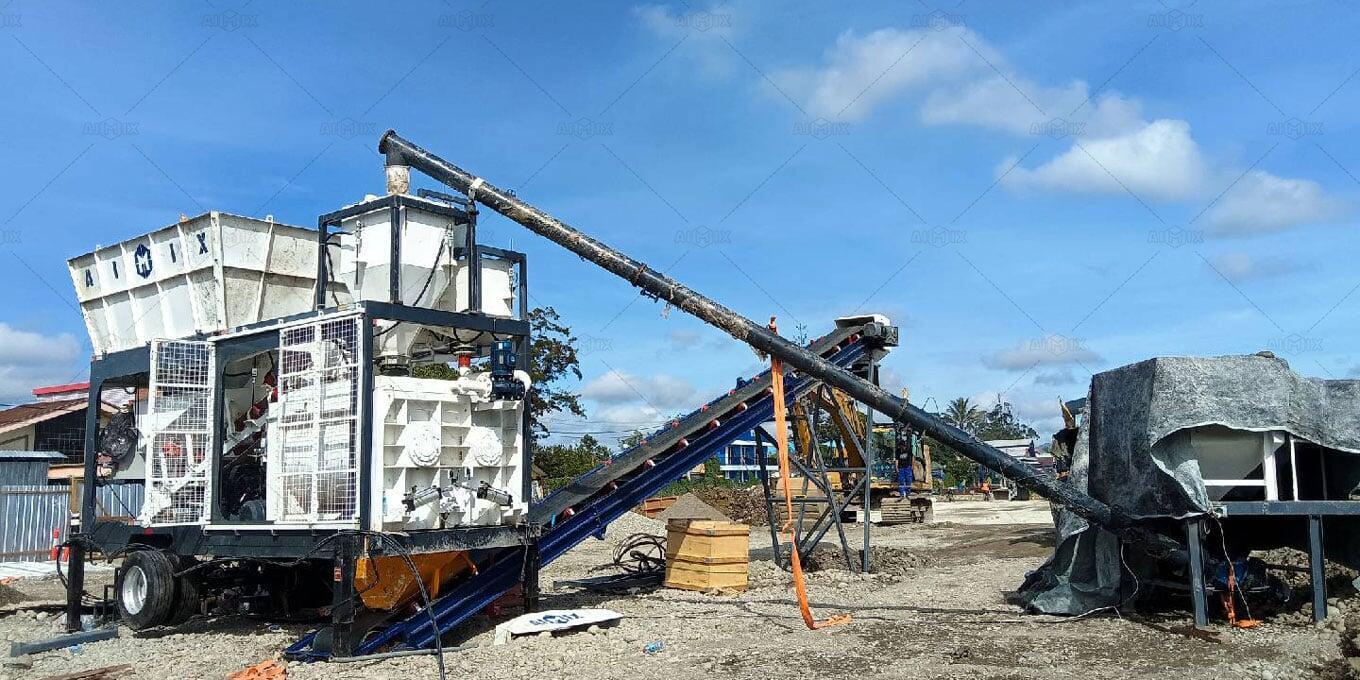
Manufacturers serving the Southeast Asian market are increasingly converging on modular, containerised plant architectures engineered explicitly for rapid mobilisation. These designs incorporate foldable aggregate bins, quick-connect electrical and pneumatic interfaces, and standardised shipping container compatibility that compresses mobilisation timelines from the multi-week durations characteristic of conventional plant erection down to mobilisation windows measured in days. This engineering trend directly addresses the commercial reality facing regional contractors, who frequently operate across multiple concurrent project sites with compressed mobilisation budgets and limited tolerance for extended equipment commissioning periods. Manufacturers who have invested deliberately in this modular design philosophy — predominantly Chinese fabricators alongside an emerging cohort of domestic Southeast Asian manufacturers in Vietnam and Thailand — are capturing disproportionate market share within this rapidly evolving competitive landscape.
Localised Manufacturing and Regional Supply Chain Development
A discernible trend toward localised manufacturing capacity is reshaping the competitive dynamics of the Southeast Asian portable batch plant market. Vietnam, in particular, has witnessed the emergence of domestic manufacturing operations producing mobile batch plants for sale calibrated specifically to regional aggregate characteristics, climatic conditions, and price sensitivities, offering compelling alternatives to imported Chinese equipment for cost-conscious regional buyers. This localisation trend, while still nascent relative to China's dominant export position, signals a maturing regional manufacturing ecosystem likely to intensify competitive pressure on import-dependent supply models over the coming years. Distributors and equipment buyers should anticipate an increasingly differentiated market featuring both premium imported options and competitively priced domestic alternatives across multiple price-performance tiers.
Digital Integration and Remote Production Monitoring
Technology integration trends visible across global concrete equipment markets are penetrating the Southeast Asian portable batch plant category with increasing velocity. Remote production monitoring capabilities, enabling project managers and equipment owners to track batching accuracy, production volumes, and maintenance indicators across geographically dispersed and frequently relocated units, address the oversight challenges inherent to managing mobile equipment fleets spread across archipelagic or remote project geographies. As regional contractors increasingly engage in multi-site project portfolios requiring centralised equipment fleet management, this digital monitoring capability is transitioning from differentiating feature to baseline market expectation, mirroring broader industry trends toward instrumented, data-transparent construction equipment operation across the Southeast Asian region.